Challenge
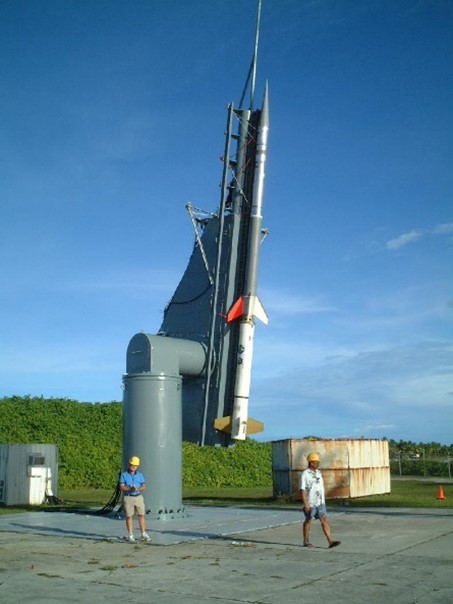
A sounding-rocket launch site at the Kauai Test Facility in Hawaii required installation of a T-slot rail system spanning 38 feet for one of their launchers. Traditional alignment tools, such as wire and machinist scales, could not access the slot or achieve the high level of accuracy demanded by the project.
Solution
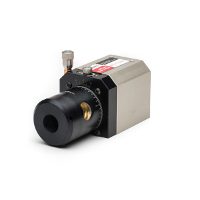
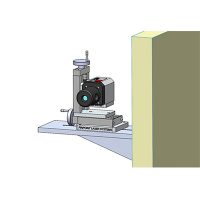
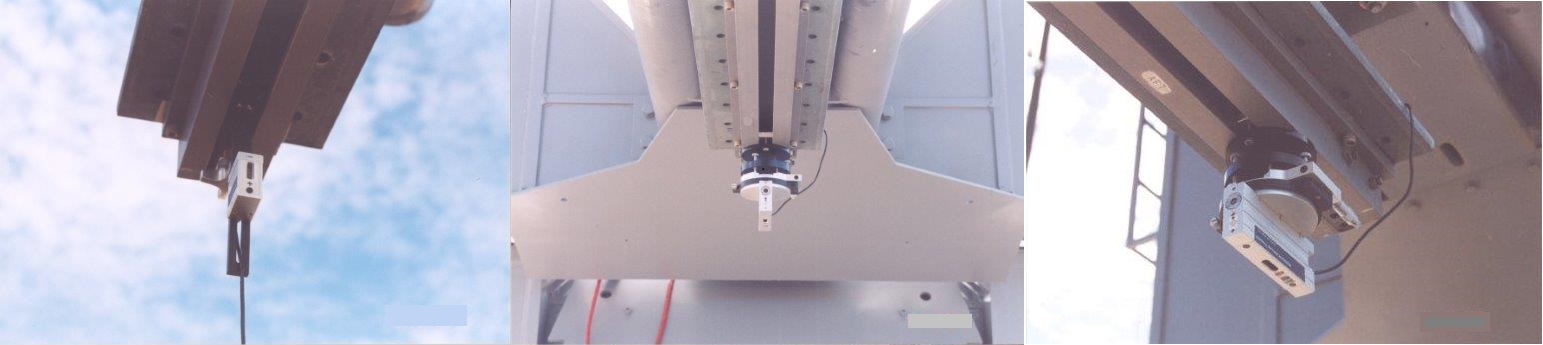
Working closely with the team from Sandia National Laboratories and their engineering team, we developed a tailored alignment solution using our advanced Microgage laser alignment technology. A Microgage Laser transmitter was mounted on a custom fixture to align the full length of the T-slot rails, while a high-precision Microagage digital receiver was moved along the rail and rack. This setup enabled real-time measurement as the rails were adjusted, allowing the alignment team to continuously monitor X and Y data throughout the installation process. By using this approach, the crew could shim and fine-tune the rails with exceptional precision, ensuring that every adjustment was guided by immediate, quantifiable feedback.
Results
The completed 450-inch rail assembly achieved an alignment accuracy of 0.012 inches total indicator reading (TIR) from end to end—well beyond what the traditional wire-and-scale method could deliver. The new process provided dramatic improvements in measurement repeatability and eliminated common problems such as wire tension deviation, sag, vibration, and breakage. The team was able to verify alignment instantly and make rapid corrections, greatly improving efficiency and confidence in the final setup.
Advantages of the Advanced Laser Alignment System
The advanced laser alignment system used for this project integrated a wireless, dual-axis digital target system capable of measuring both X and Y axes simultaneously. It maintained full accuracy over an operating range exceeding 120 feet and was able to capture hundreds of data points to generate a complete quantitative alignment map. A self-centering fixture ensured consistent mounting and reference positioning throughout the process. The system’s single-pass rail mapping capability allowed the team to identify high points and determine shim requirements efficiently, while the real-time, hand-held display provided immediate feedback during data collection, allowing alignment adjustments to be made on the fly.
Time-Saving Applications
This same approach can be applied to the assembly and alignment of new launch systems, as well as for pre-launch validation and verification of existing rail installations. The laser-based process enables rapid setup, adjustment, and verification of rail alignment, creating a workflow that is faster, more accurate, and more intuitive than traditional mechanical methods.
Conclusion
This custom alignment solution illustrates how custom precision laser technology can dramatically improve the accuracy, repeatability, and efficiency of launch rail installations. By ensuring a perfectly aligned launch system, facilities can enhance overall mission safety, reliability, and accuracy of predicted impact points. For organizations developing or maintaining sounding-rocket systems and launch apparatus, this high-precision alignment capability provides a vital foundation for performance and success.