
Challenge
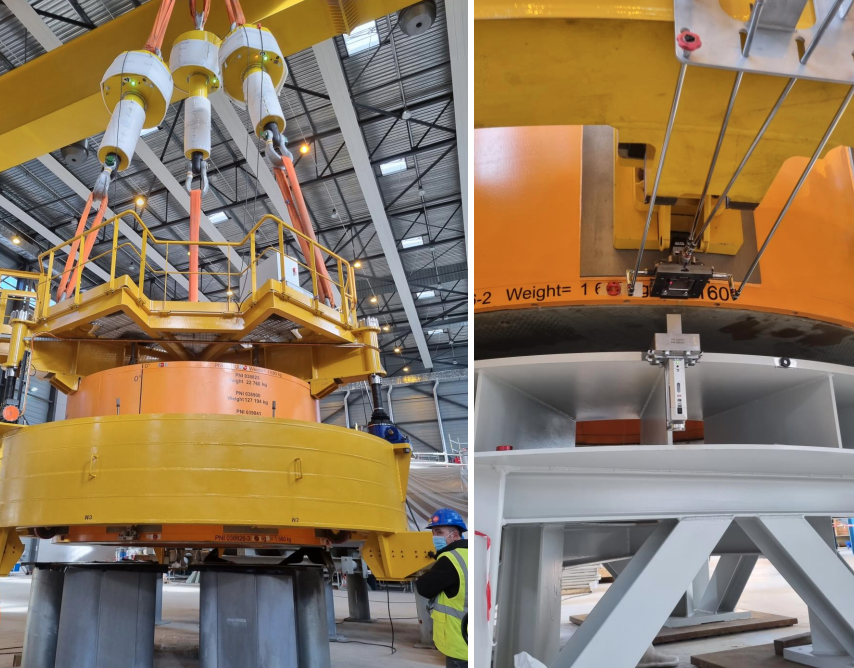
ITER (International Thermonuclear Experimental Reactor) approached Pinpoint Laser Systems looking for a customized alignment system that could align large, fixed magnets and sub-assemblies during the assembly of the tokamak, the doughnut-shaped magnetic confinement chamber designed to contain and control super-hot plasma where nuclear fusion occurs.
The ITER project is a large-scale international collaboration aimed at demonstrating the feasibility of nuclear fusion as a practical and sustainable energy source. Located in southern France, ITER brings together 35 countries—including the United States, European Union members, China, India, Japan, Russia, and South Korea—to build the world’s largest tokamak, a magnetic confinement device designed to replicate the energy-producing process of the sun. Once operational, ITER is expected to produce 500 megawatts of fusion power from 50 megawatts of input, proving that fusion can generate clean, virtually limitless energy with minimal environmental impact.
The problem?
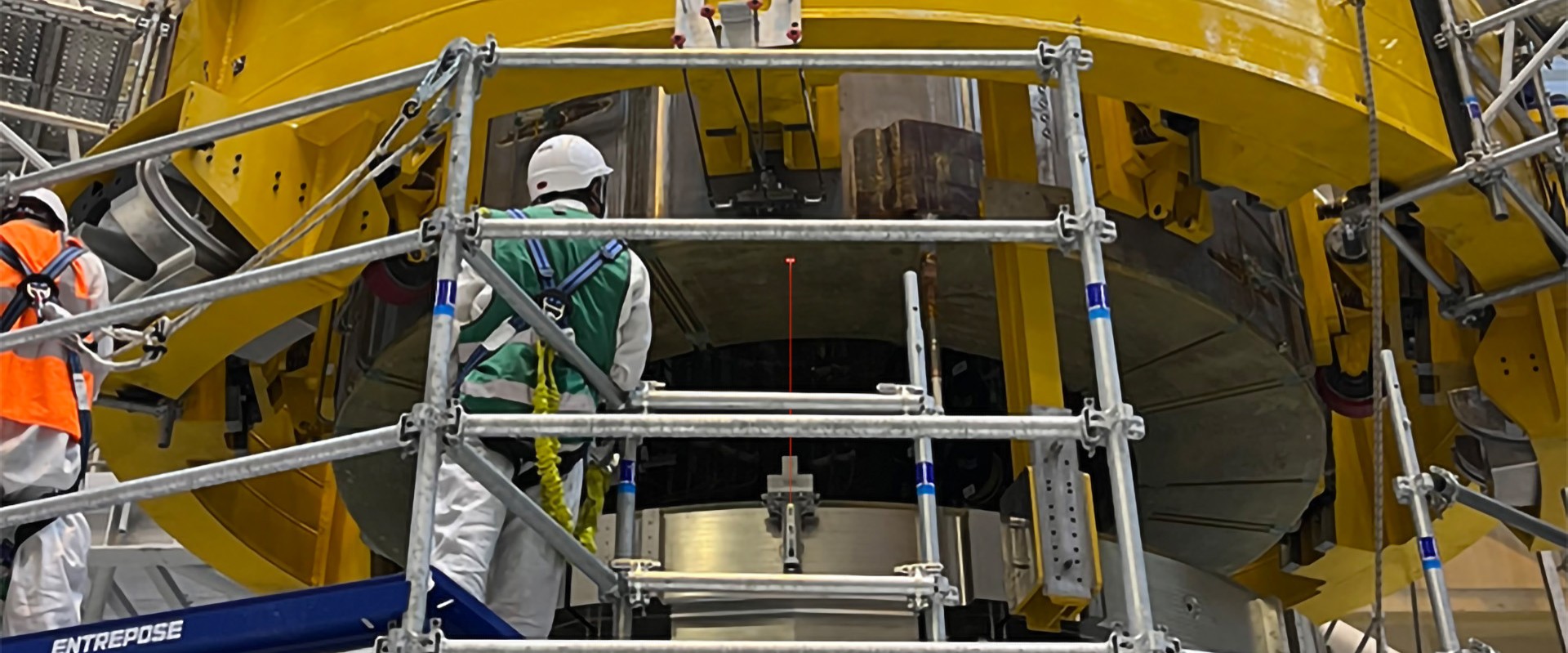
The alignment system needed to be portable and highly accurate so that it could provide position data on specific magnet parts of the reactor system during the construction process and provide precise XY measuring and alignment data in real time to assist the engineering team with positioning and final alignment.
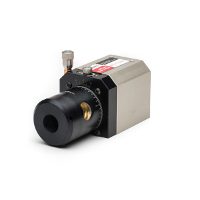
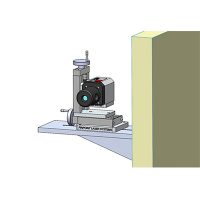
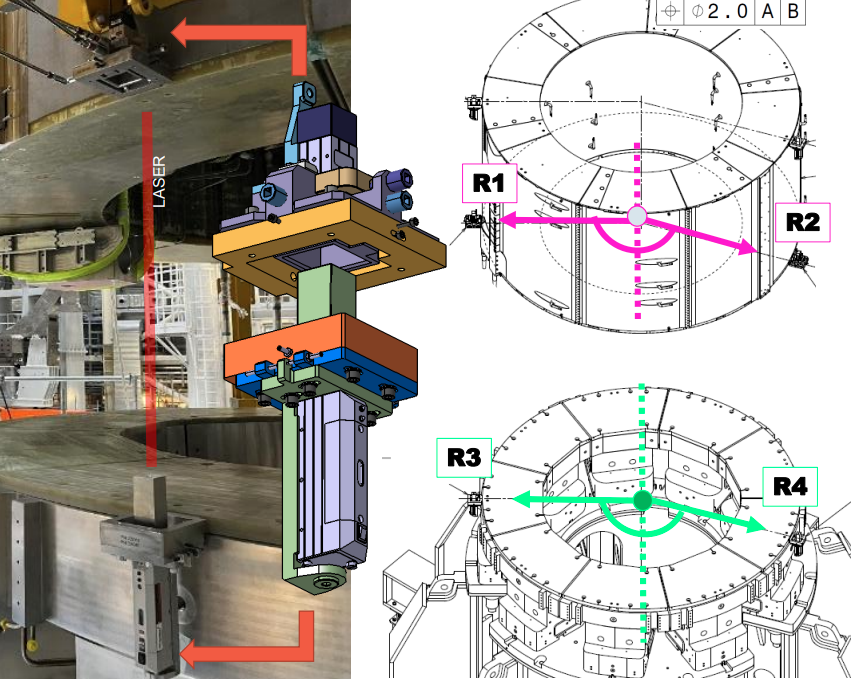
Pinpoint Laser Systems determined that a Microgage Pro Plus System would be perfect for this application, but with slight modifications. They also selected a Microgage Laser Transmitter for the laser reference beam, which was attached to a custom mounting fixture that could attach to the magnet base.
As the long heavy magnets were positioned the Laser Microgage provided 0.001” location data to assist with alignment and final positioning.
Pinpoint Laser Systems developed customized mounts that Microgage Receiver would attach to. This way the engineers could gathers the readings from laser reference beam and provide an XY position for the assembly. The X/Y measurements were displayed on a graphic screen so that the operator could perform the adjustments of the fixed magnets and the sub-assemblies while finalizing assembly.