Over the past 15 years, the electronics industry has undergone remarkable advancements in technology that requires precision manufacturing. As electronic devices become smaller and more powerful, the miniaturization of microchips, integrated circuits (ICs) and other components has led to an increased demand for highly accurate production techniques.
Precision and efficiency in manufacturing are critical for ensuring component accuracy, as electronic devices require parts with very tight tolerances. For example, the semiconductor industry produces chips and ICs to precision tolerances at the nanometer scale.
High-precision processes not only result in fewer defects, they reduce the need for rework. In addition, increased precision minimizes the risk of failure, making electronic devices more reliable in operation.

Laser Alignment in Electronics Processes
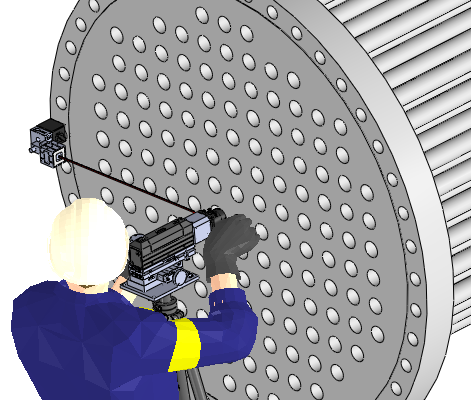
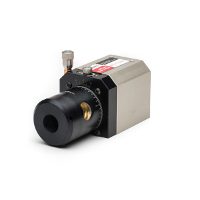
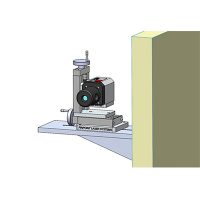
Laser alignment systems play an essential role in the electronics production process. These systems use laser beams to measure, align and verify the positioning of parts, machinery, moving assemblies and robotic transfer equipment. This ensures the smooth transport, placement and production of parts with little or no variation from specifications.
Laser alignment systems align equipment components such as shafts, motors, couplings and rotating parts according to specified tolerances, enhancing precision, speed, productivity and machine output while extending equipment longevity.
These systems can detect minute deviations in equipment alignment with a precision of 0.0001”, allowing for the precise alignment of electronic components at various distances, angles and displacements. Since they are non-contacting, they never touch the object under measurement, eliminating the risk of introducing additional errors or damaging sensitive components. They are also operate faster than traditional mechanical measurement tools and provide real-time feedback, enabling automated systems or technicians to make immediate adjustments.
Applications
Numerous machinery processes are involved in the production of electronic components and devices. For example, pick-and-place machines are essential for assembling components onto printed circuit boards. These machines automate the process of selecting individual components and placing them onto boards with high speed and accuracy. Laser alignment systems verify and correct the alignment of components in these machines, ensuring parts are picked and placed accurately.
In automated assembly lines within electronics manufacturing, laser alignment systems monitor the position or robotic arms, conveyors, material handling robots and other machinery. Real-time alignment feedback allows for micro-adjustments to maintain a correct path or position as parts move through various stages of assembly and as robotic arms perform different tasks.
Laser alignment systems can be used for variety of tasks associated with electronics production, including:
-
- Aligning robotic test equipment
- Assembling and servicing ion implanters
- Checking the runout on moving stages
- Installing and checking robotic transfer equipment
- Verifying the alignment of automated PCB & SMT insertion equipment
- Aligning robotics for disk drive testing systems
- Verifying the parallelism of guides and ways
- Checking bed and gantry travel
- Ensuring straightness alignment for transfer equipment
- Checking equipment squareness
In electronics, even the smallest misalignment can lead to significant performance issues or failures. From guiding robots in delicate tasks to optimizing assembly lines, laser alignment systems are indispensable in modern electronic manufacturing, where small tolerances and high precision are essential. These tools are key in driving innovation and increasing efficiency in the ever-evolving electronics industry.